
Case Studies / The Ohio State Spine Institute Cervical Spine Health Improvement
Healthcare
Business Intelligence
Custom CMS Website
Switchbox partnered with OSU's Spine Research Institute to build a digital health prototype that captures low back motion using wearable IMU sensors—successfully completing all DoD Phase I grant requirements and securing 10x follow-on funding for commercialization.
0x
Phase II funding relative to Phase I
The Challenge
No objective way to measure low back health
Despite decades of clinical research, healthcare professionals still face a major diagnostic gap: there are virtually no objective, real-time metrics to assess neck and spine disorders.
This lack of data creates problems at multiple levels. Clinicians struggle to accurately diagnose and monitor neck pain over time. Employers can’t effectively evaluate the impact of workplace ergonomics or injury prevention programs. Patients are often left with generic treatment plans and unclear recovery timelines.
The Spine Research Institute (SRI) at The Ohio State University set out to solve this problem with a first-of-its-kind prototype that could quantify neck movement using wearable sensor technology.
Our Approach
Scoping a sensor-based prototype for clinical and commercial use
Switchbox worked closely with the SRI team to define technical requirements for a prototype that could meet the rigorous standards of a Department of Defense Phase I grant. We evaluated wearable IMU sensor options, scoped the software architecture for real-time data collection and analysis, and designed custom mounting hardware for reliable, consistent sensor placement across body types.
The platform was designed with clinical accuracy and commercialization in mind from the start—built to scale from a research prototype to an enterprise-grade system.
What We Built
A wearable sensor platform with real-time motion data
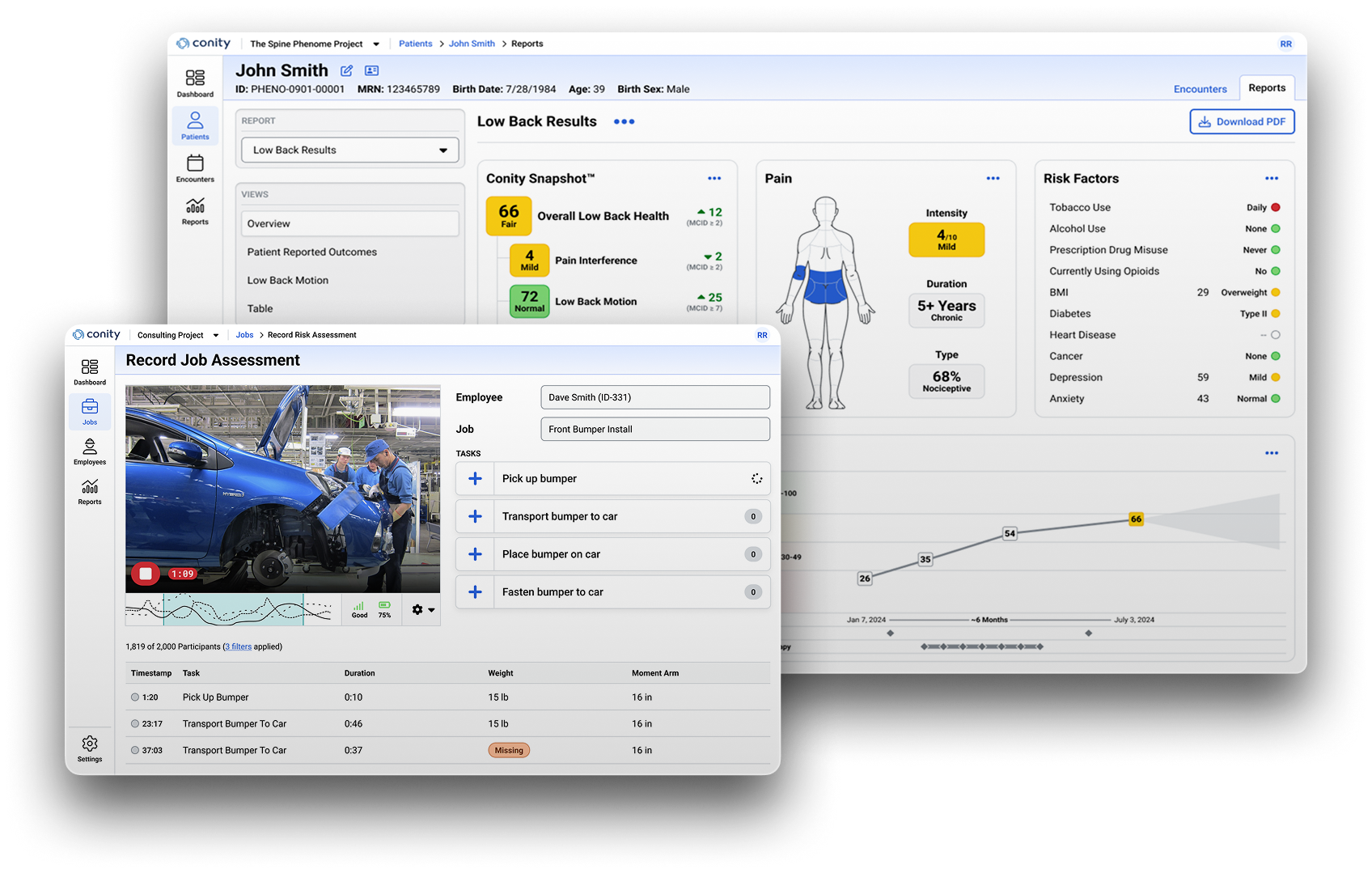
Partnering with Switchbox, SRI developed a digital health prototype to capture, analyze, and deliver functional, quantifiable metrics of cervical spine motion using wearable inertial measurement unit (IMU) sensors.
Key elements of the solution included: a user-friendly software application that collects and processes sensor data in real time; digital forms and metadata capture tools to integrate clinical questionnaires and other relevant inputs; custom mounting hardware designed for quick, reliable sensor placement across a variety of body types; and a back-end system built for accuracy, reliability, and scalability.
This prototype marks a shift in how neck injuries can be diagnosed and tracked—not through assumptions or subjective reports, but through real, reproducible movement data.
The Results
10x funding and a clear path to commercialization
After successfully completing all technical requirements for the Department of Defense Phase I grant, SRI and Switchbox were selected for Phase II funding—at 10 times the original investment.
The Phase II initiative will focus on evolving the prototype into a scalable, enterprise-grade platform; developing clinically actionable metrics for medical providers and occupational health decision-makers; and positioning the system for future regulatory approval and widespread adoption.
This collaboration is pushing forward a new era of precision diagnostics in musculoskeletal health—where software, sensors, and science converge to improve care.
Scaling one experience across a lot of locations?
That is the kind of problem we like. Let's talk about what it could look like for you.
Start a Conversation