
Case Studies / Time Warner
Telecom
Business Intelligence
Corporate IT
Web App Development
Switchbox built a centralized web and database tracking system for Time Warner Cable that standardizes customer service representative feedback across dozens of vendor call centers—enabling anonymous peer performance reviews, management dashboards, and data-driven coaching at scale.
The Challenge
Lack of sync hindered coaching and quality
Time Warner Cable faced challenges in maintaining consistent customer service across numerous vendors in diverse locations due to difficulties in tracking, coaching, and managing customer interactions.
Weber and Associates, the lead on a project to address this, had conducted an in-depth user interface analysis of the call tracking process—but required assistance in establishing optimal methods for collecting, storing, and analyzing data from the various call centers.
Switchbox was engaged to develop a central web and database tracking system to standardize feedback provided to customer service representatives across all service centers.
Our Approach
Designing a data model for high-volume call tracking
Switchbox worked in partnership with Weber and Associates, who had completed the UI/UX analysis of the call tracking workflow. We provided input on the data model modifications needed to handle the reporting and performance requirements across Time Warner’s high-volume, multi-vendor call environment.
We scoped the structure for peer review aggregation, individual coaching workflows, and management reporting before building the custom web solution—ensuring the data model could support both real-time evaluation and long-term performance trend analysis.
What We Built
A central system to standardize performance data
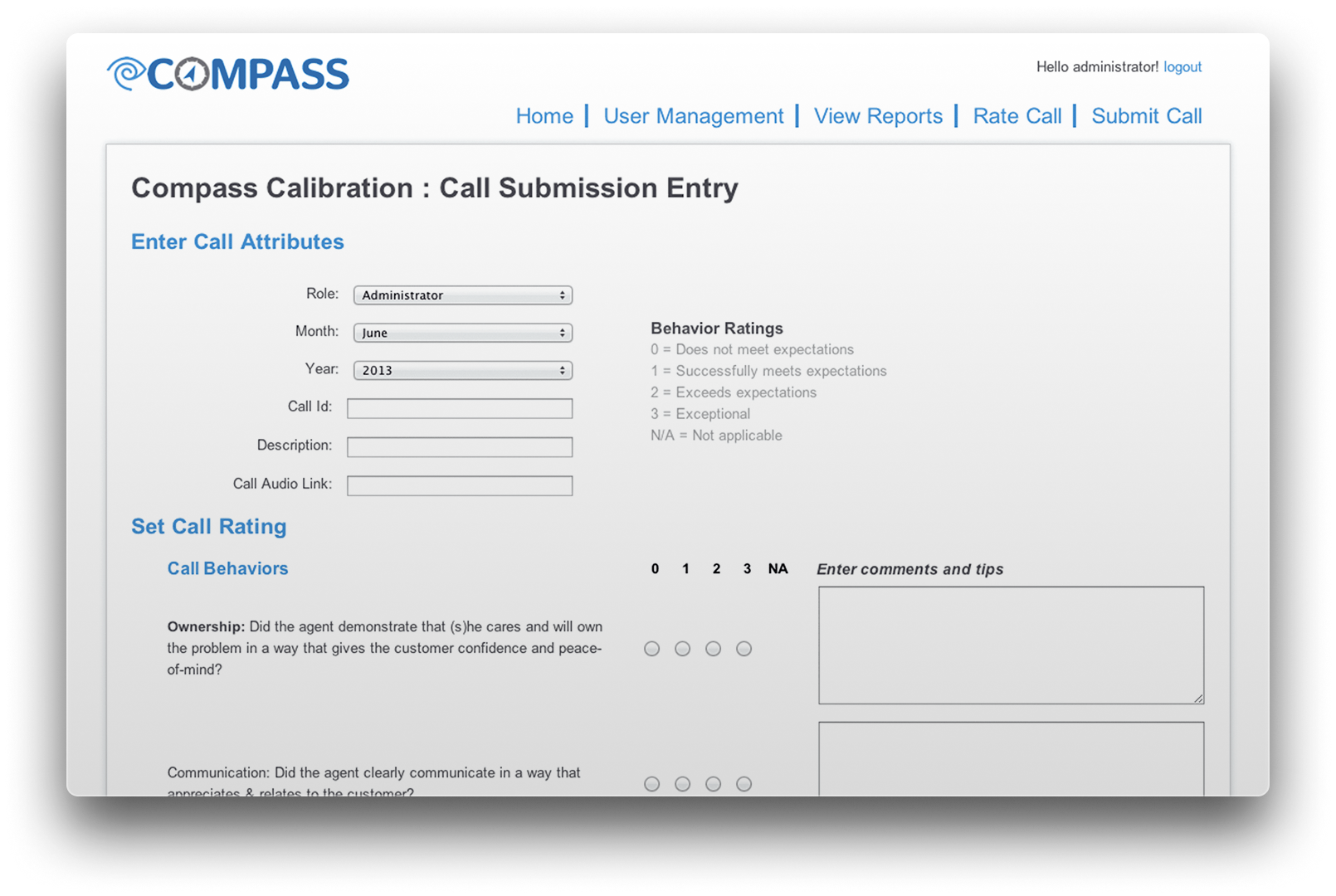
A custom web solution was developed based on the established UI/UX design. Customer Service Representatives and their managers could log calls and listen to recordings. A peer group could anonymously evaluate all calls, with this aggregated data serving as a statistically significant ‘peer performance review’—also providing training for the reviewers.
Reports were generated to highlight issues at specific locations or with individual employees, enabling managers to take appropriate action. A user-friendly management dashboard consolidated thousands of individual reports into a clear and concise overview.
The Results
Data-driven reports improved CSR accountability
The custom web application enabled customer service representatives and their managers to record calls, access recordings, and participate in an anonymous peer evaluation system. The collective data formed a statistically significant peer performance review, which also served as a training tool for call reviewers.
Reports could be generated to highlight issues at specific locations or with individual employees—enabling management to implement appropriate corrective measures and drive consistent service quality across all vendors.
Scaling one experience across a lot of locations?
That is the kind of problem we like. Let's talk about what it could look like for you.
Start a Conversation